Is your business clean enough for your employees and visitors? Or are there a few areas your team keeps forgetting?s
Maybe the trash gets left behind, the restroom needs attention, or your reception area looks fine until you actually notice the dust and fingerprints hidden away. These small things can make your busy facility chaotic.
That’s why a commercial cleaning checklist matters. It helps you figure out what needs cleaning and how often it needs detailed attention, as well as which areas you must never ignore.
But where should you start? What belongs on a daily checklist? Which tasks can wait until the end of the week? And when does it make sense to bring in professional cleaning services? In this guide, we’ll cover all these important cleaning checklist items.
Let’s break it down…
Daily Commercial Cleaning Checklist: What Needs Attention Every Day?
Some cleaning tasks can’t wait. If your building is used every day, then trash and spills can quickly gather up. So, what should your team or cleaning provider check each day?
| Area | What to Check |
| Trash and recycling | Empty bins, replace liners, and remove food waste. |
| Restrooms | Clean toilets, sinks, mirrors, and floors. |
| Break rooms | Wipe counters, clean sinks, and remove food waste. |
| Workspaces | Dust desks, tables, and shared surfaces. |
| Floors | Vacuum carpets and mop hard floors. |
| High-touch areas | Clean handles, switches, counters, and railings. |
| Entrances | Check doors, mats, floors, and reception areas. |
| Common areas | Remove trash and keep shared spaces tidy. |
This is indeed your basic daily cleaning checklist. Of course, the exact tasks will only depend on your facility. Have a busy office? Then you need more frequent restroom and entrance cleaning than a small workplace.
Office Cleaning Checklist: Don’t Forget the Everyday Work Areas
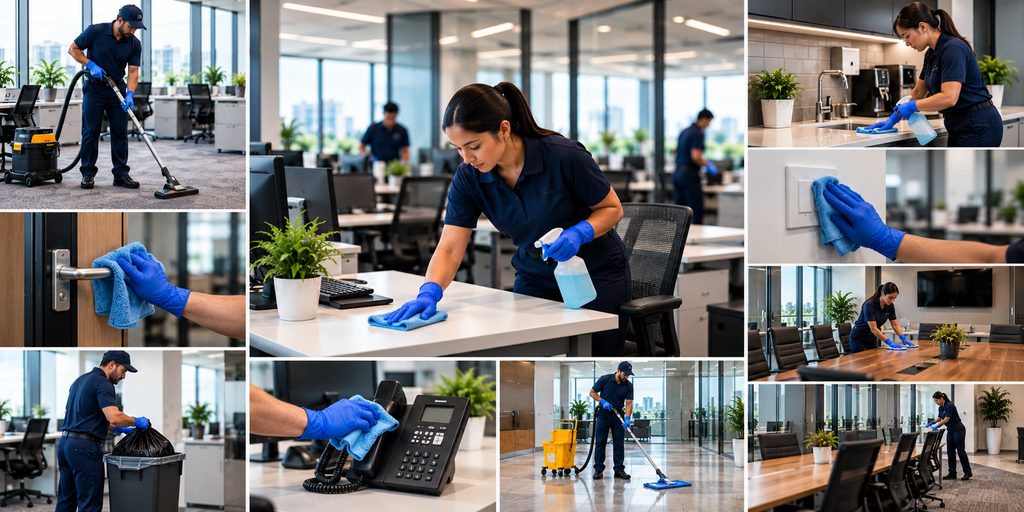
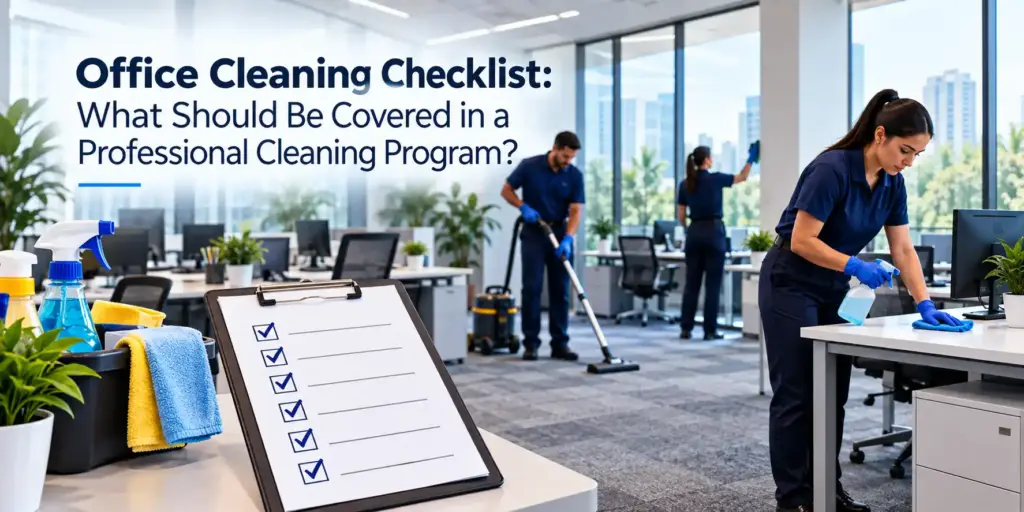
Your employees spend a lot of time in offices and other shared spaces… Right? These areas will look clean at first, but dust and everyday trash gather and make the space completely messy. So, the items listed below must be included in your office cleaning checklist.
- Dust desks, tables, or other accessible surfaces.
- Wipe shared counters and work areas.
- Vacuum carpets and rugs.
- Mop hard floors.
- Empty waste bins.
- Clean shared equipment surfaces where appropriate.
- Wipe door handles and light switches.
- Keep meeting rooms and conference rooms tidy.
- Check that walkways remain clear.
One thing to remember: cleaning an office is not only limited to wiping the areas people notice first. Shared surfaces, along with frequently used spaces, also need regular attention.
Restrooms, Break Rooms, and Shared Areas
Keep in mind that these are the places where people actually notice a mess right away. Your commercial area’s bathroom might look clean, but then you spot an overflowing trash can or realize there’s no soap left. Not a great experience, right?
The same goes for break rooms. A dirty sink or leftover food can quickly make the space unpleasant to use.
— Restroom Cleaning Checklist
- Clean toilets, sinks, and mirrors.
- Mop restroom floors.
- Wipe personal touch surfaces.
- Clean partitions and door handles.
- Empty trash bins.
- Refill soap, toilet paper, and paper towels.
- Check for spills or maintenance issues.
— Break Room and Kitchen Checklist
- Wipe tables and countertops.
- Clean sinks and faucets.
- Remove food waste.
- Empty trash and recycling bins.
- Clean visible spills.
- Mop floors.
- Check basic supplies.
You don’t want employees and visitors walking into a filthy and chaotic space, right? Keep these areas cleaned regularly, and they’ll be ready to use whenever someone needs them.
Weekly Commercial Cleaning Checklist: What Shouldn’t Be Missed?
You don’t need to tackle every cleaning task every single day. Some things can wait until the end of the week or be handled during a periodic deep clean.
But here’s the thing—when you’re doing a quick daily cleanup, it’s easy to miss certain spots. You know those corners and high surfaces where dust somehow keeps piling up? Yep, those.
So, when you’re putting together your weekly or periodic facility cleaning checklist, make sure you add these tasks too:
| Cleaning Area | Tasks to Consider |
| Corners and edges | Clean along walls, baseboards, and floor edges. |
| Under furniture | Reach beneath desks, tables, and chairs where practical. |
| Doors and frames | Wipe doors, frames, handles, and fingerprints. |
| Blinds and ledges | Dust accessible blinds, ledges, and window areas. |
| High surfaces | Remove dust from accessible high surfaces. |
| Interior glass | Clean glass doors, partitions, and interior windows. |
| Less-used spaces | Check storage rooms, back offices, and secondary areas. |
| Detailed floor care | Schedule additional cleaning based on floor type and condition. |
You don’t need to finish every task every week. But it’s all about making sure these areas have a place in your cleaning schedule.
The Cleaning Areas Businesses Often Overlook
You may have a regular cleaning routine and still miss a few important spots.
Why? Because cleaning teams naturally focus on areas that are used the most or are easiest to see. That’s why your cleaning checklist must also include the small areas.
Here are a few things worth checking:
- Door frames and handles
- Light switches
- Corners and baseboards
- Areas beneath furniture
- Accessible vents and registers
- Blinds and window ledges
- Less-used rooms
- Janitorial storage areas
- High-touch surfaces
- Edges around floors and walls
You don’t have to clean every surface in a building the same way every day. Still, you must focus on the above-listed areas and don’t ignore them.
How Often Should Your Business Follow a Cleaning Checklist?
There’s no single cleaning schedule that works for every business. A small office with fewer people will need some different cleaning specifications as compared to a busy facility with more employees and visitors all day.
So, how do you decide what belongs on your daily, weekly, or monthly schedule?
| Cleaning Frequency | Typical Tasks | What to Consider |
| Daily or nightly | Trash, restrooms, floors, shared surfaces | Foot traffic and daily use |
| Several times a week | High-touch areas, busy restrooms, break rooms | How quickly dirt and mess build up |
| Weekly | Corners, ledges, detailed dusting, less-used areas | Facility size and cleaning priorities |
| Monthly or periodically | Detailed floor care and selected deep-cleaning tasks | Flooring, building condition, and specific needs |
| As needed | Spills, special requests, unexpected messes | Changes in daily operations |
For example, a busy office may need daily restroom cleaning and nightly floor care. A less-used storage area may only need attention once a week or according to the facility’s needs. The goal is to set a schedule that matches how your building is actually used.
Customize Your Cleaning Checklist for Your Facility
Should a small office use the exact same cleaning checklist as a large commercial building?
Most probably not.
Your cleaning plan should reflect your facility, employees, visitors, and working hours. Otherwise, you may end up spending time on tasks that don’t need frequent attention while missing areas that do.
Before setting your schedule, consider:
- Building size: How much space needs regular cleaning?
- Facility layout: Which areas are shared, private, or even difficult to access?
- Foot traffic: Where do employees and visitors move throughout the day?
- Business hours: When can cleaning happen without disrupting work?
- Facility type: Does your building have specific cleaning or sanitation needs?
- High-use areas: Which restrooms and entrances, as well as shared spaces need more attention?
A financial office, healthcare facility, warehouse, or other type of retail location will not necessarily need the same cleaning routine.
A good facility cleaning checklist helps you focus on what your building actually needs rather than adding unnecessary tasks to the list.
Workplace Sanitation: What Should Your Team Check?
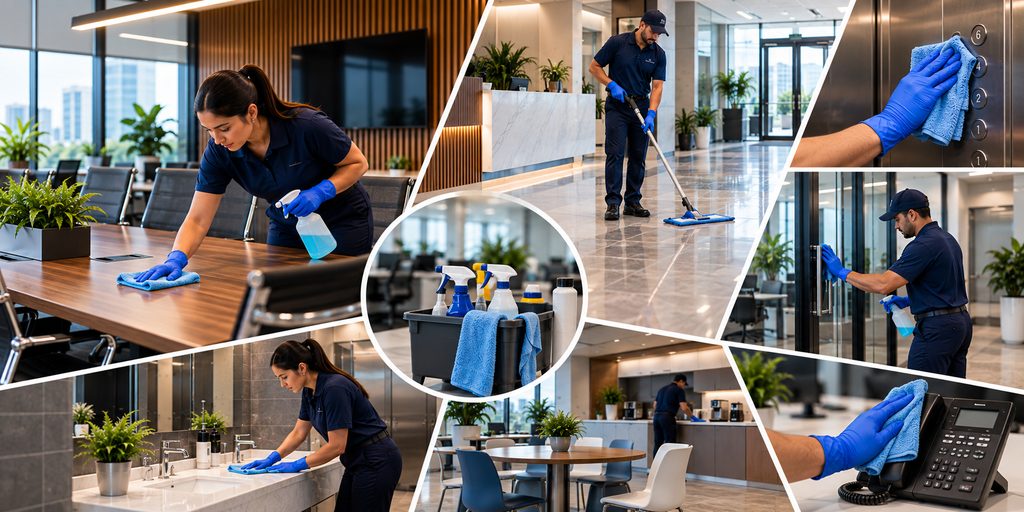
Workplace hygiene and sanitation go hand in hand, particularly in areas where people spend a lot of time. You don’t have to complicate things. Simply start with the locations that people use and touch most frequently.
— High-Touch Areas
Pay regular attention to these areas, as every employee or staff member, or even your clients, touches them:
- Door handles
- Light switches
- Handrails
- Shared counters
- Elevator buttons
- Common equipment surfaces
- Restroom fixtures
— Shared Spaces
You must give detailed attention to these below-listed shared spaces. Check whether:
- Trash is removed regularly.
- Restrooms have basic supplies.
- Break room counters and sinks are clean.
- Floors are free of spills and visible dirt.
- Frequently used surfaces receive appropriate cleaning.
- Cleaning products and supplies are stored properly.
The exact cleaning and sanitation process should match the type of facility as well as the requirements of the space. Some workplaces could possibly need specific procedures beyond routine cleaning.
When Should You Consider Professional Cleaning Services?
A checklist is useful, but someone still needs to complete the work.
If your employees keep handling cleaning tasks, or your team has to follow up on missed areas, it may be time to look at professional cleaning services.
Here are a few signs that outside support could help:
- Cleaning tasks keep getting pushed back.
- Your employees spend time handling routine cleaning.
- Restrooms and common areas need more frequent attention.
- Your facility has multiple areas with different cleaning needs.
- Your current schedule doesn’t cover overlooked spaces.
- You need cleaning after business hours.
- You want a more consistent cleaning routine.
A professional cleaning company can help organize regular cleaning around your facility’s schedule and priorities.
Before hiring a provider, ask a few straightforward questions:
| Question | Why It Matters |
| What tasks are included? | You’ll know what the service covers. |
| How often will cleaning happen? | You can match the schedule to your needs. |
| Can the plan be customized? | Your facility may need a different routine. |
| Can cleaning happen after hours? | You can avoid disrupting employees and customers. |
| Who handles missed tasks? | You’ll know who to contact when something needs attention. |
| Is an on-site consultation available? | You can discuss your facility in person. |
You don’t have to follow a complicated process. You just need a cleaning plan that makes sense for your business.
Create a Commercial Cleaning Checklist That Works for Your Business With Jani-King
A cleaning checklist is a good starting point, but your facility may need more than a standard list of tasks.
Jani-King Austin can help you discuss your cleaning needs, facility schedule, and regular priorities. No matter if you need routine cleaning or attention to crowded areas, or even a plan for periodic tasks, the goal is to build a service schedule around your business.
With a practical cleaning plan, you can:
- Keep everyday mess under control.
- Give busy areas regular attention.
- Stay on top of overlooked tasks.
- Plan cleaning around business hours.
- Spend less time chasing cleaning issues.
If you’re looking for commercial cleaning services in Austin, talk with Jani-King about what your facility needs. A simple conversation can help you work out a cleaning routine that fits your business.
Frequently Asked Questions Regarding Commercial Cleaning Checklist
1. What will a commercial cleaning checklist include?
It must cover daily cleaning, weekly tasks, restrooms, offices, break rooms, floors, high-touch surfaces, entrances, as well as less-used areas.
2. How much cleaning does your building need?
Check your traffic and daily use. Busy areas may need cleaning every day.
3. What goes on an office cleaning checklist?
Start with desks, meeting rooms, floors, restrooms, and shared spaces.
4. What spots should you check?
Look at corners, switches, door frames, ledges, and under furniture.
5. When should you call a cleaning company?
If your team can’t keep up, let a cleaning company take it off their plate.