Running a business or managing your workplace? Means you already have enough things to handle… Right? Overflowing trash bins, dirty restrooms, dusty workstations, or even a break room that needs cleaning before the day can properly begin.
And when the cleaning tasks become tough to manage, then you either call a cleaner or do everything yourself. That’s where professional cleaning services become a real relief for you.
But what exactly should a professional cleaning program cover? How often does your workplace really need cleaning? And which jobs need regular janitorial cleaning versus a deeper clean?
We’ll look at what a proper cleaning program includes, how often different areas need attention, what to check before choosing a cleaning provider, and how to make cleaning one less thing for your team to worry about.
Let’s dig deeper into this…
What Is a Commercial Cleaning Program?
A commercial cleaning program keeps your workplace clean and maintained according to your business schedule.
So, next time, instead of calling a random cleaning person, you can hire a commercial cleaning expert who will make your workplace completely refreshed.
Keep in mind that your workplace is not the same as other businesses. Office. Restaurant. Medical facility. Warehouse. Retail space… all have completely different cleaning needs. That’s why a good commercial cleaning company designs a customized cleaning strategy according to your facility.
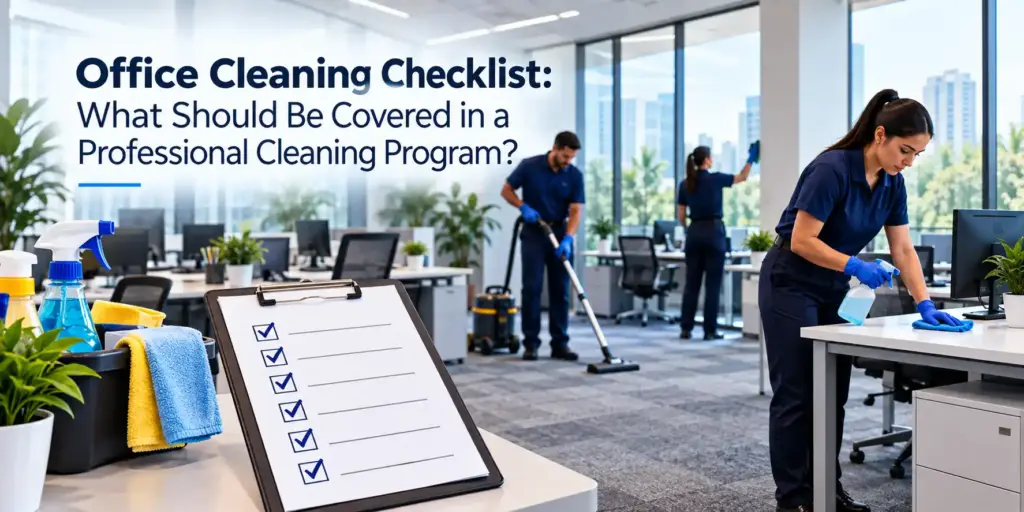
A proper cleaning program usually covers:
- What needs cleaning and which areas need extra attention.
- How often each area should be cleaned.
- When cleaning should happen around your business hours.
- Any facility-specific or high-traffic cleaning needs.
- Periodic deep cleaning beyond routine tasks.
- Clear quality expectations and communication when something needs attention.
The main goal is to have a proper system that keeps your commercial cleaning from becoming something you constantly have to think or worry about 24/7.
Why Your Business Needs More Than an Occasional Clean
Buildings don’t dirty themselves, it’s the amount of people/staff in the building and the amount of in/out traffic (employees, clients, patients, etc.) in your facility daily.
A busy workplace always gets messy fast. Think about the restroom your staff uses all day or the lobby where customers walk in and out all the time. These areas can look fine in the morning and need attention again after a few hours.
That’s why you need a routine commercial cleaning service that keeps up with how people actually use your workplace. Here’s what a regular cleaning routine helps you manage:
| Without regular cleaning | With a regular cleaning routine |
| Mess builds up quickly | Problems get handled before they pile up |
| Employees take on cleaning tasks | Your team stays focused on work |
| High-traffic areas get overlooked | Frequently used areas get regular attention |
| Small issues can become bigger problems | Ongoing maintenance stays under control |
What Does a Professional Commercial Cleaning Program Include?
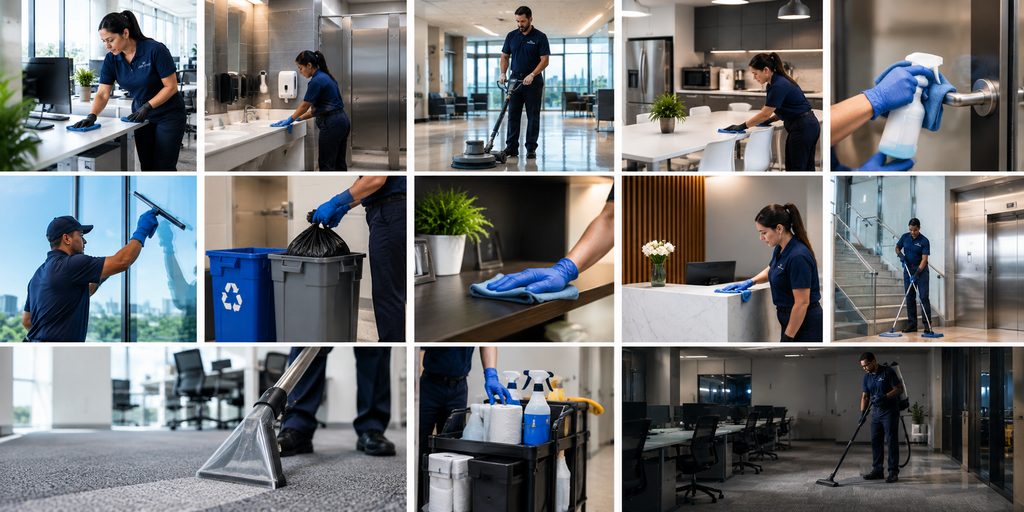
The right commercial cleaning approach looks at how people use your workplace and which spaces need daily attention. It doesn’t treat every part of your facility the same way. Here’s what a commercial cleaning program may include for your space.
— Workplace & Common Areas
Just think about the spaces everyone uses throughout the day. Employees walk through hallways, sit at workstations, attend meetings, or even gather in shared areas. That’s why these spaces collect dust and everyday clutter quickly.
Cleaning may include:
- Workstations and desks
- Reception areas
- Waiting areas
- Meeting rooms
- Conference rooms
- Hallways and corridors
- Shared workspaces
- Entryways
- Trash and recycling removal
- Dusting and surface cleaning
— Restrooms
Think about how many people use your restroom during a normal business day. Employees, customers, visitors—it can add up fast.
You may already have wet floors, empty soap dispensers, overflowing paper towels, or even sinks covered with water spots everywhere. A proper cleaning routine keeps these small issues from turning into something people notice immediately.
What should be covered:
- Toilets, urinals, sinks, and countertops
- Floors, walls, and other frequently touched surfaces
- Mirrors and fixtures
- Soap, paper towels, toilet paper, and other essentials
- Odor control and regular waste removal
— Floors & Carpets
How often do you actually clean your floors? If you have a busy office entrance, then you definitely need daily sweeping and mopping as well.
Handle spills and stains, or dirt gets stuck every time you notice them, even after cleaning. That’s the reason you should hire a reliable and professional cleaner who takes care of all areas diligently.
A cleaning program may include:
- Daily vacuuming, sweeping, and mopping
- Spot cleaning for spills and stains
- Carpet cleaning when needed
- Extra cleaning for entrances and high-traffic areas
- Floor maintenance based on the surface type
— Break Rooms & Kitchens
The break room is usually where yesterday’s coffee cup, today’s lunch crumbs, and that mystery spill on the counter all end up. People use these spaces throughout the day, so they need regular cleaning.
What should be covered:
- Countertops, tables, sinks, and other shared surfaces
- Floors and food-related spills
- Trash and recycling
- Frequently touched handles and appliances
- Restocking of agreed-upon supplies
— High-Touch Surfaces
Some areas simply get touched all day long. Door handles, light switches, railings, elevator buttons, as well as shared equipment… all need regular attention.
Your cleaning plan should identify these regularly used surfaces instead of just treating every surface type exactly the same.
Common examples include:
- Door handles and push plates
- Light switches
- Elevator buttons
- Railings
- Shared equipment
- Phones and shared devices
- Frequently used counters
- Other commonly touched surfaces
— Windows, Glass & Mirrors
You can have spotless floors, but what about fingerprints all over the front glass? Think about glass entry doors that everyone touches or mirrors showing watermarks.
These areas may need daily touch-ups or scheduled cleaning at regular intervals, depending on your facility.
What should be covered:
- Entry doors and interior glass
- Windows
- Glass partitions
- Mirrors
- Fingerprints, smudges, dust, and water marks
— Trash & Recycling
Nobody wants to walk into an office and see a full trash bin sitting just beside the reception desk.
The same goes for those overflowing bins in the break room or even the restroom. To remove the trash on time so your workplace stays clean, you need a regular cleaner.
What should be covered:
- Emptying office and common-area bins
- Restroom waste removal
- Break room and kitchen waste
- Recycling collection
- Replacing liners
- Moving waste to the appropriate disposal area
— Dusting & Surface Cleaning
Look beyond the obvious places like desks or even countertops. Regular surface cleaning will take care of those overlooked areas instead of letting dust quietly build up week after week.
What should be covered:
- Desks and shared work surfaces
- Shelves and cabinets
- Ledges and baseboards
- Furniture and fixtures
- Hard-to-reach or less frequently cleaned surfaces
— Entryways & Reception Areas
Your entrance is one of the first parts of your workplace people see. It also gets plenty of foot traffic, especially in businesses that regularly welcome customers and visitors. Keeping it clean will help your space remain presentable throughout the day.
Cleaning may include:
- Entryway floors
- Reception desks
- Waiting areas
- Glass doors
- Mats and rugs
- Seating areas
- Frequently touched surfaces
- Visible dust and debris
— Stairways, Elevators & Corridors
Stairways or corridors are areas that no one notices while cleaning. People use these areas repeatedly throughout the day. Including them in your cleaning routine will surely help you clean these areas.
Regular attention may include:
- Stairs and landings
- Handrails
- Elevator floors
- Elevator buttons
- Corridor floors
- Walls and corners
- High-touch surfaces
— Periodic & Deep Cleaning
Not every cleaning job belongs on a daily checklist. Carpet extraction or detailed floor care or even interior glass cleaning only make sense weekly, monthly or at another interval.
Separate these tasks from your everyday janitorial work. This will help you make sure they actually get done instead of being forgotten because your daily checklist is already full.
These may include:
- Deep carpet cleaning
- Detailed floor care
- High dusting
- Detailed glass cleaning
- Cleaning less frequently used areas
- Seasonal or scheduled deep-cleaning projects
— Cleaning Supplies & Restocking
Imagine someone walks into the restroom, uses the last paper towel, and finds the dispenser empty. Or an employee checks the soap dispenser and gets nothing. The cleaning itself may be done, but the job isn’t really finished if the supplies people rely on aren’t available.
Your cleaning program can include checking these items and keeping agreed-upon supplies stocked.
This may include:
- Toilet paper
- Paper towels
- Hand soap
- Trash liners
- Other agreed-upon restroom or facility supplies
— Cleaning Around Your Business Hours
Don’t want someone vacuuming around employees while they’re working attentively. Some businesses generally prefer cleaning after closing time, but some need daytime service for restrooms or even entrances.
The right schedule will depend only on when your facility is busiest and which areas need attention throughout the day.
Your schedule can account for:
- Before-opening cleaning
- After-hours cleaning
- Daytime touch-ups
- High-traffic periods
- Customer-facing areas
- Areas that cannot be cleaned while occupied
— Facility-Specific Cleaning Needs
Your cleaning plan must, according to your commercial areas, actually operate, rather than just giving you a generic checklist that doesn’t even fit the way your business works.
Your plan may need to consider:
- Number of employees and visitors
- Daily foot traffic
- Customer-facing areas
- Type of business
- Operating hours
- High-use areas
- Industry-specific cleaning requirements
- Areas requiring additional attention
How Cleaning Supports a Smoother Business Day
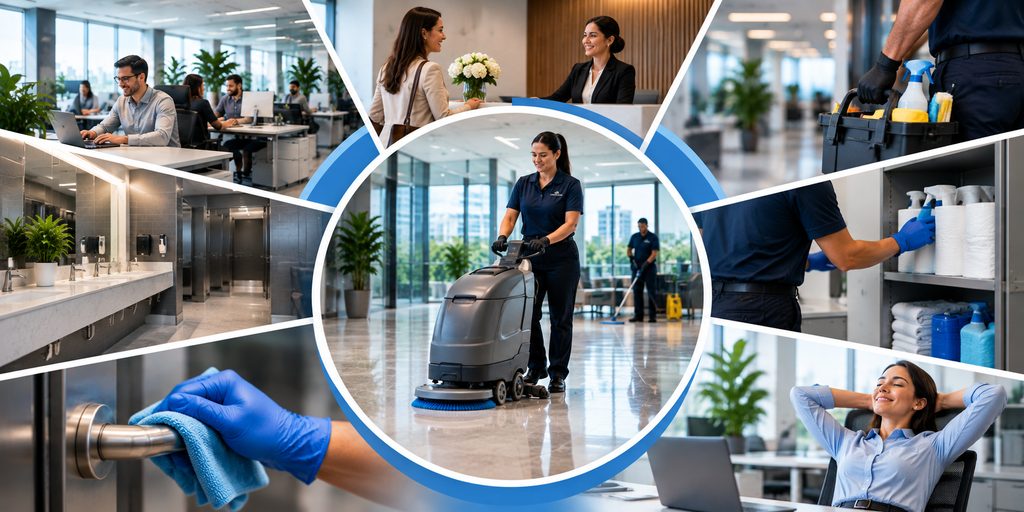
— Fewer Distractions for Employees
Your employees already have their own work to handle. Why make them deal with overflowing bins or report the same messy area again and again?
These tasks may seem small, but they still take time away from their actual work. Regular workplace cleaning takes these everyday tasks off their plate. It helps your team:
- Stay focused on their actual work
- Spend less time dealing with cleaning issues
- Work in a cleaner, more comfortable space
- Avoid constantly reporting the same problems
— A Better Experience for Customers and Visitors
What does a customer see when they first walk into your business? The entrance, reception area, floors, restrooms, as well as waiting areas can all shape their first impression.
See, you don’t need an extravagant workplace, but you do want it to feel clean and looked after. Regular cleaning will help you maintain that standard throughout the day. Pay attention to areas such as:
- Entrances and reception desks
- Waiting and customer areas
- Restrooms
- Floors and carpets
- Glass doors and other visible surfaces
— Less Day-to-Day Maintenance Pressure
If your cleaning isn’t properly scheduled, who ends up chasing it? Usually, a manager, office administrator, facility team, or someone else who already has plenty on their plate.
Instead of constantly checking what was missed or remembering what needs to happen next, set up a routine that clearly covers the required cleaning tasks. A consistent program will help with:
- Keeping regular cleaning on schedule
- Reducing last-minute cleaning requests
- Making responsibilities clearer
- Addressing recurring problem areas
- Giving managers one less thing to constantly monitor
— Better Organization
Ever walk into a shared kitchen and find yesterday’s dishes still sitting around? Or a supply area where nobody knows where anything belongs?
Cleaning and organization usually go hand in hand. When common areas and workspaces get regular attention, people use those spaces properly. Regular cleaning will support:
- Cleaner and more usable shared spaces
- Clearer work areas
- Better-maintained common rooms
- Less clutter around frequently used areas
- Easier upkeep between scheduled services
— A More Comfortable Workplace
Your employees spend a large part of their day at work, so the condition of the workplace matters.
Nobody wants to sit beside a full trash bin, use a dirty restroom, or eat lunch in a break room that hasn’t been cleaned. You don’t have to promise that cleaning will solve every workplace issue.
Just keep the environment clean and comfortable. That means giving attention to:
- Restrooms employees use throughout the day
- Break rooms and eating areas
- Desks and shared surfaces
- Floors and carpets
- Frequently touched areas
- Common spaces employees share regularly
How Often Should a Business Be Cleaned?
How often does your business actually need cleaning? There’s no single answer. A 10-person office and a busy restaurant clearly won’t need the same schedule.
Employee numbers, foot traffic, restroom use, operating hours, visitors, and the type of facility all make a difference. As a general starting point, you might need:
- Daily: Restrooms, trash, high-touch surfaces, and busy common areas
- Several times a week: Offices and moderate-traffic areas
- Weekly or periodically: Lower-traffic spaces and deeper cleaning tasks
The right schedule should always be adjusted around how your facility is actually used and any industry-specific requirements.
What Is the Difference Between Janitorial Services and Deep Cleaning?
Wondering if you need regular janitorial service, deep cleaning, or even both? Here’s the easiest way to understand what you seriously need for your commercial place. This detailed table will help you understand all those areas you are confused about…
| Practical Cleaning Basis | Janitorial Services | Deep Cleaning |
| What problem does it solve? | Handles everyday dirt, trash, spills, and mess | Tackles buildup, neglected spots, and harder-to-clean areas |
| When is it needed? | Daily or several times a week, depending on your facility | Weekly, monthly, quarterly, seasonally, or when needed |
| What gets cleaned? | Restrooms, floors, bins, desks, break rooms, common areas | Carpets, detailed floors, high areas, corners, glass, and overlooked surfaces |
| What happens during a busy week? | Keeps the workplace from getting messy day after day | Gives extra attention to areas that regular visits don’t fully cover |
| How much time does it take? | Designed around your regular cleaning schedule | Usually takes more time because the work is more detailed |
| When should you consider it? | When your workplace needs consistent day-to-day upkeep | When you notice buildup, stains, neglected areas, or need a more thorough clean |
| Can one replace the other? | No. Routine cleaning alone may not cover every detailed task | No. Deep cleaning isn’t meant to replace regular upkeep |
Why Do You Need Both Sometimes?
See, if you only deep clean, then what will happen to the regular cleanings? You still need to remove trash, still need to clean restrooms and so on every day. Regular janitorial service will handle that ongoing work. On the other hand, deep cleaning will give the less frequent jobs the attention they need.
You can go for a better approach:
- Janitorial services for your everyday commercial area maintenance
- Deep cleaning for less frequent yet detailed cleaning jobs
- Both together when you actually want your cleaning program to cover all routine as well as those periodic needs
When Should You Consider Hiring a Commercial Cleaning Company?
Not sure if it’s time to bring in professional help? Look at what’s happening around your facility. If cleaning keeps getting pushed aside, missed, or added to your employees’ workload, a regular commercial cleaning company may simply make more sense. Here are a few signs you can watch for:
- Employees are handling cleaning tasks
- Restrooms or common areas are often missed
- Cleaning quality changes from day to day
- Managers keep following up
- Your facility or team has grown
- You need after-hours cleaning
- Occasional help is no longer enough
How to Choose the Right Commercial Cleaning Company
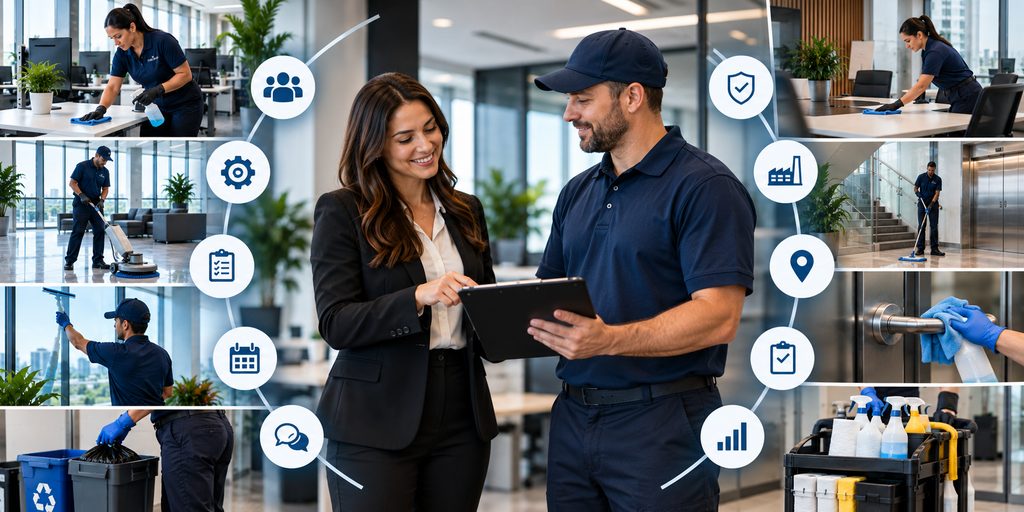
Choosing a cleaning company is about more than finding someone who can vacuum and empty trash. You need a provider that can actually work around your business and maintain the same standard over time.
— Experience That Actually Matches Your Business
How much experience does the company have with businesses like yours? That matters more than simply seeing a big number of years on a website. For example, a busy restaurant, medical office, and corporate workplace can all have very different cleaning requirements, schedules, and problem areas.
Pro Tip: Ask about similar facilities they currently or previously served.
— Flexibility When Your Needs Change
Your cleaning requirements aren’t necessarily going to stay the same all year. Maybe you’re hosting an event, expanding your workspace, changing operating hours, or suddenly dealing with heavier traffic. For example, you may need additional cleaning visits during a particularly busy month.
Remember: Your cleaning provider should be able to adjust to your business.
— A Cleaning Plan Built Around Your Facility
Why pay for a generic checklist when your facility doesn’t operate like everyone else’s? A good plan should consider your layout, traffic, working hours, restrooms, common areas, and specific problem spots. For example, your entrance may need daily attention while a storage room doesn’t.
Professional tip: Ask whether the provider evaluates your facility before recommending services.
— Communication You Can Actually Rely On
What happens when something gets missed? You shouldn’t have to wonder who to call or send three follow-up messages just to get an answer. For example, if a restroom wasn’t cleaned properly before opening, you need a simple way to report it and get the issue addressed.
Tip: Before hiring, find out exactly who handles service concerns and requests.
— Scheduling That Doesn’t Disrupt Your Day
Cleaning should fit into your business hours—not constantly get in the way of them. An office may prefer cleaning after employees leave, while a retail business may need certain areas handled before opening. The right schedule depends on when your facility is actually being used.
Remember: Discuss operating hours and preferred cleaning times upfront.
— More Than Just Basic Cleaning
Do you only need someone to handle everyday janitorial work, or will you eventually need carpet cleaning, floor care, glass cleaning, or deeper cleaning too? For example, routine service can handle daily upkeep while periodic services take care of jobs that need more time.
Professional tip: Check the provider’s full range of services before making your decision.
— Experience With Your Industry
A cleaning company may be excellent at office cleaning but have limited experience with facilities that operate very differently.
For example, a restaurant deals with food-related messes and frequent traffic, while a healthcare facility may have different cleaning priorities and procedures.
Pro Tip: Ask whether the provider regularly works with businesses in your industry.
— Local Support When You Need It
Having a cleaning provider nearby can make communication and service changes easier. If you’re ready to discuss your facility, you can contact Jani-King of Austin for a free on-site estimate.
You want someone who can actually support your location instead of treating every request like a distant service ticket.
Remember: Ask who manages your local account and handles service issues.
— Quality Control That Doesn’t Leave You Guessing
How does the company know whether the cleaning was done properly? A reliable provider should have a way to check service quality, receive feedback, identify missed areas, and make corrections. For example, if the same restroom or hallway keeps getting overlooked, the issue should be identified and addressed.
Professional tip: Ask how they monitor cleaning quality after service begins.
— Services That Can Grow With You
What happens when your business gets bigger? You may add another floor, hire more employees, extend operating hours, or open another location. For example, a cleaning schedule that works perfectly for your current office may not be enough after you expand.
Pro Tip: Choose a provider that can increase or adjust services as your facility changes.
How Jani-King Helps Businesses Keep Cleaning on Track
Need a cleaning plan that actually fits your business? Jani-King has 40+ years of commercial cleaning experience and serves businesses across South Central Texas through its regional office in Cedar Park and 110+ local franchisees.
Instead of giving every facility the same routine, Jani-King creates cleaning plans around your facility and schedule needs. You can start with an on-site consultation, choose flexible cleaning service schedules, and also get 24/7 support from the Regional Office Operations team.
Services are available for offices, healthcare facilities, restaurants, hotels, manufacturing facilities, fitness centers, schools, and other commercial spaces.
What you can expect:
- Customized cleaning plans
- On-site consultations
- Flexible scheduling
- Professional commercial cleaning services
- Support across South Central Texas
- Local franchisee coverage
- Regional Office Operations support
To Wrap Up:
You already have enough to manage—employees, customers, schedules, and everything else that keeps the business moving. Cleaning shouldn’t keep landing on your team’s to-do list. A reliable cleaning program keeps the workplace comfortable and ready for everyone who uses it.
With Jani-King, you can get a cleaning plan built around your facility and everyday needs. Get in touch to discuss your cleaning needs and find the right service plan for your business.
Also Read: office-cleaning-checklist-guide
Frequently Asked Questions
1. What does a commercial cleaning program actually cover?
It can cover everyday cleaning like restrooms, floors, trash, break rooms, common areas, and high-touch surfaces, plus deeper cleaning when needed.
2. How often does my business need cleaning?
It totally depends on your workplace. If you have a busy commercial space or healthcare facility, then you may need cleaning more often.
3. Do I need regular janitorial cleaning or deep cleaning?
You may need both, but it depends on what space you manage. Janitorial cleaning handles the everyday mess, and deep cleaning takes care of more detailed cleaning.
4. When should I hire a commercial cleaning company?
If your employees are spending time cleaning, areas keep getting missed, or your current cleaning routine isn’t keeping up, it may be time to bring in professional help.
5. Can the cleaning schedule fit my business hours?
Yes. You can schedule cleaning around your operating hours, whether you need service during the day, before opening, or after closing.
6. Can I get a cleaning plan made for my facility?
Absolutely. Your cleaning needs depend on your facility, traffic, employees, operating hours, and the areas that need the most attention.
7. What should I look for in a commercial cleaning company?
Look for experience, flexible scheduling, reliable communication, customized cleaning plans, quality checks, and support when you need it.
8. Why choose Jani-King for commercial cleaning?
Jani-King brings 40+ years of commercial cleaning experience and serves businesses across South Central Texas with local support.
Tapped: auto-dealerships, education, event-venues, financial-offices, fitness-centers, government-offices, healthcare-facilities, hospitality, manufacturing, office-buildings, places-of-worship, restaurants, technology, services