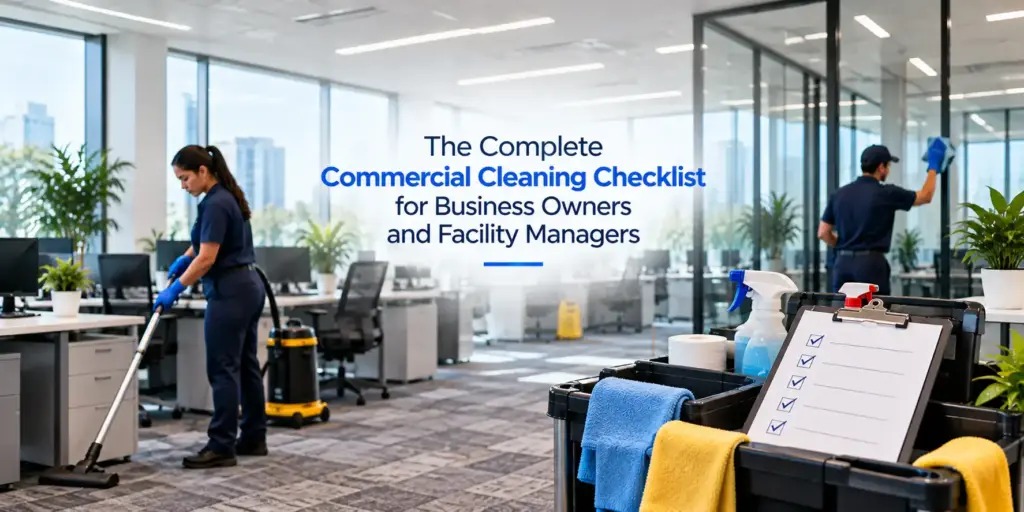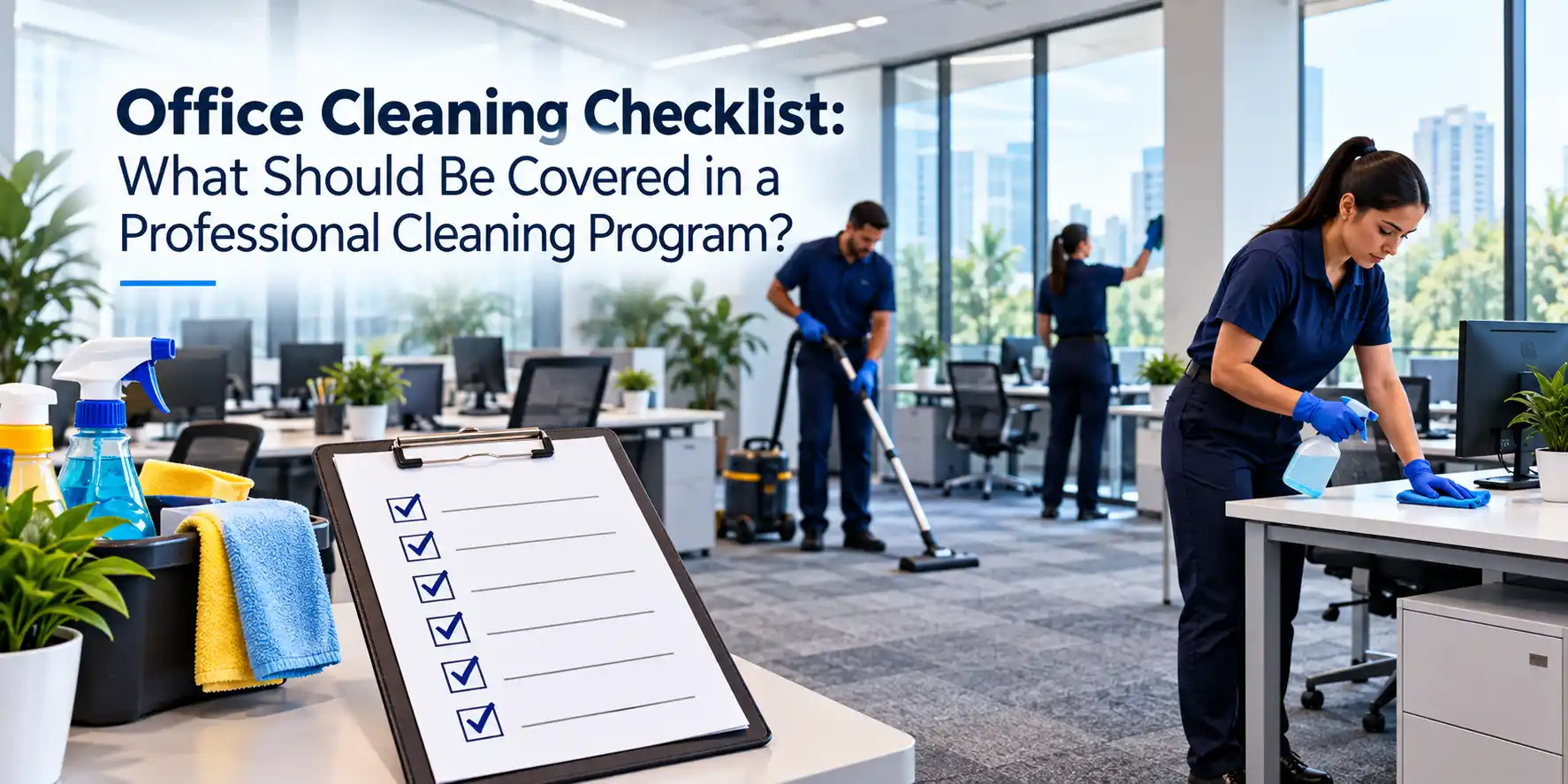
Is your office cleaning checklist really covering everything? Dusting, vacuuming, along with emptying trash, are only the obvious tasks. But what about vents, corners, door frames, areas beneath furniture and other details that you miss?
Your common list of cleaning tasks is not the same as a specialized cleaning program. A proper plan will tell you what to clean, how often to clean it, and what shouldn’t be overlooked.
In this guide, we’ll look at what a professional office cleaning checklist must cover, how daily, weekly and monthly tasks differ, and which overlooked areas you have to give extra attention to.
Let’s take a closer look…
What Should a Professional Office Cleaning Checklist Actually Include?
Does your office cleaning checklist simply look like a list of chores? It must include what needs to be cleaned and how often each task should be handled. Here are some important questions you need to understand while creating an office cleaning checklist…
— What Needs Cleaning?
Be specific about the actual cleaning work, such as:
- Emptying trash
- Wiping desks and tables
- Cleaning restrooms
- Vacuuming carpets
- Mopping hard floors
— Where Does It Need Cleaning?
An office has more than just workstations. Your checklist should cover areas like:
- Offices and conference rooms
- Restrooms
- Break rooms and kitchens
- Entrances and common areas
— How Often Does It Need Cleaning?
Not everything needs attention every day. Break the work into:
- Daily or nightly cleaning
- Weekly detail cleaning
- Monthly cleaning and maintenance
— Who Takes Care of It?
Want to make sure the cleaning actually gets done? Someone needs to keep an eye on the routine. That means:
- Assigning cleaning tasks
- Following the planned schedule
- Checking that important areas aren’t missed
- Handling extra cleaning when needed
Daily Office Cleaning Checklist: What Needs Attention Every Day?
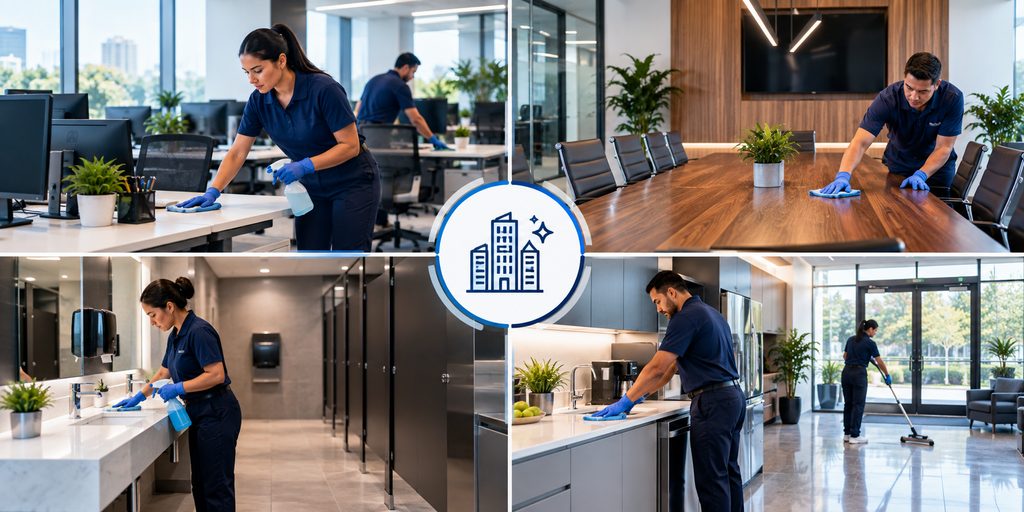
What gets messy first in your office? Usually, it’s the areas everyone uses. Here are the key areas you should give extra attention to if you really want your office to stay neat and clean…
— Workstations & Conference Rooms
Workstations and conference rooms can pick up dust and fingerprints or spills throughout the day. Daily cleaning will keep these spaces presentable and ensure common surfaces and floors don’t get neglected.
- Wipe desks, tables, and other horizontal surfaces
- Dust furniture, file cabinets, and windowsills
- Clean up spills, coffee rings, and fingerprints
- Empty trash and replace liners
- Vacuum carpets
- Dust mop and damp mop hard floors
- Clean entry glass and spot-clean partition glass
— Restrooms
Restrooms need more than a quick wipe. Everyone uses the restroom all day, so they literally get messy quite fast. Daily cleaning must cover the toilets, sinks, mirrors, floors, trash, supplies to keep the space fresh and ready to use.
- Clean and sanitize toilets and urinals
- Clean toilet seats on both sides
- Scour and sanitize sinks
- Clean countertops and mirrors
- Remove splash marks around sinks and fixtures
- Empty trash and sanitary receptacles
- Restock towels, tissue, and hand soap
- Damp mop floors with disinfectant
- Polish faucets and other bright work
— Break Rooms & Kitchen Areas
Break rooms and kitchen areas usually get messy pretty quickly. People spill coffee, leave crumbs behind, touch appliances, fill up the trash. Daily cleaning will take care of these everyday messes and it will also keep your space fresh for everyone.
- Clean and polish sinks
- Wipe counters and coffee bars
- Clean tables and chairs
- Remove spills and fingerprints
- Wipe appliance exteriors
- Clean microwave interiors
- Empty trash
- Sweep or vacuum hard floors
- Mop floors where spills or dirt are present
— Common Areas & Entrances
Common areas along with entrances are generally the first spaces employees or visitors see. And obviously, they also receive a lot of foot traffic and collect dirt as well as fingerprints. You must give daily attention to keep these regular areas looking clean.
- Empty trash and remove debris
- Dust horizontal surfaces and furnishings
- Clean and polish drinking fountains
- Vacuum carpets and spot-clean as needed
- Dust mop and damp mop hard floors
- Clean entrance glass and metal surfaces
- Remove fingerprints from doors and walls
- Clean elevator walls and stairwell touchpoints
- Vacuum elevator tracks when needed
- Spot-clean partition glass
What Gets Missed When You Only Clean the Office Every Day?
Daily cleaning takes care of the mess people notice first, but it doesn’t even mean every part of the office gets the same attention. Some areas need more time and a closer look. That’s where weekly and monthly detail cleaning comes in.
— Weekly Detail Cleaning
Weekly cleaning goes beyond the everyday routine. It focuses on places that can easily get skipped when the priority is keeping the office ready for the next day.
| Area | What to Check |
| Edges & corners | Dust and dirt along floor edges and corners |
| Beneath furniture | Dirt and debris under desks, tables, and other furniture |
| Carpets | Detailed vacuuming around edges and beneath furniture |
| Hard floors | Detailed dust mopping and damp mopping |
| Furniture & vertical surfaces | Dust desks, chairs, file cabinets, and other surfaces |
— Monthly Cleaning
Monthly cleaning usually takes care of the areas you don’t even notice and clean every day but still can’t ignore. Think high surfaces, vents, blinds, and other spots where dust and marks can quietly accumulate.
| Area | What to Check |
| High dusting | Dust high surfaces that aren’t reached during regular cleaning |
| Vents | Remove accumulated dust from heat and air vents |
| Blinds & window coverings | Dust blinds and other window coverings |
| Doors & switches | Remove fingerprints and marks around door frames and light switches |
| Telephones | Damp wipe and disinfect telephone surfaces |
| Floor care | Buff, refresh, or refinish floors when needed |
Don’t Forget These Often-Overlooked Office Areas
Okay, now let’s think about the places that don’t usually make it onto your regularly scheduled cleaning list. Ask yourself… When was the last time someone checked the elevator tracks or simply looked behind the furniture?
These spots are easy to forget, even when the rest of the office looks spotless.
- Corners, edges, and ledges
- Elevator tracks
- Partition glass and fingerprints
- Vents and high surfaces
- Door frames and light switches
- Blinds and window coverings
- Areas under desks and furniture
- Janitor closets
- Cleaning equipment
- Leaks, plumbing issues, broken lights, or loose doors
These aren’t the first things you notice when you walk into an office. But leave them alone for long enough, and you’ll definitely start noticing them.
How Often Should Your Office Be Professionally Cleaned?
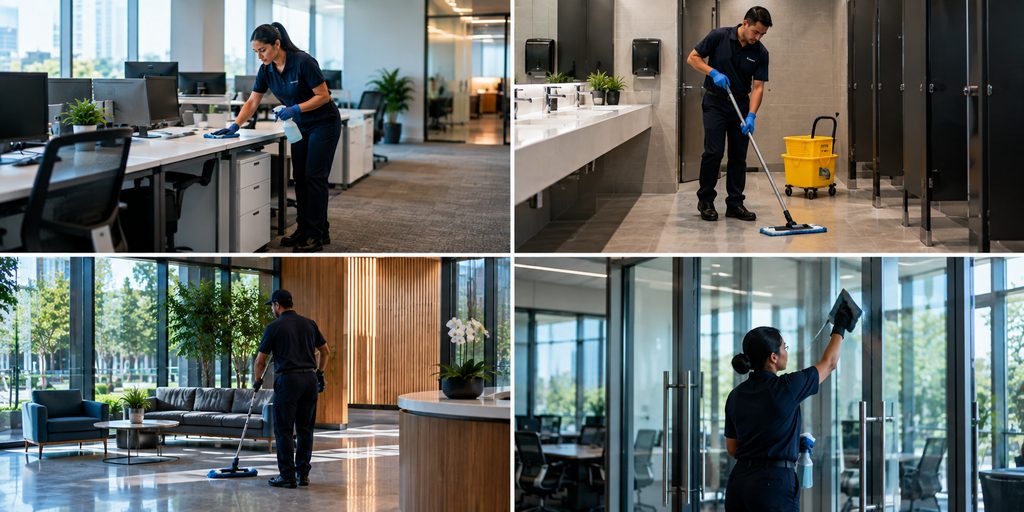
How many times must you clean your office professionally? It actually relies on what goes on there every day. Here are some cleaning schedules you can follow according to your office:
— Daily or Nightly Cleaning
Think about what your office looks like after a busy day. Trash fills up, coffee gets spilled, floors collect dirt, restrooms get a ton of use. Daily or even nightly cleaning will help clear up that everyday mess so you can easily walk into a clean office… the next morning.
— Weekly Detail Cleaning
What about the stuff you don’t notice every day? That’s where weekly cleaning comes in. Things like dusty corners, floor edges, carpet edges, areas under furniture, and surfaces that don’t need wiping every single day can get a proper clean.
— Monthly Cleaning
Then there are the jobs you might not even notice until someone points them out. High surfaces, vents, blinds, window coverings, door frames, light switches can slowly collect dust and fingerprints.
— Your Office May Need a Different Schedule
So, should every office follow the same cleaning schedule? Not really. Think about how many people use the space, how much foot traffic you get, how often the restrooms and break rooms are used, and even your business hours.
Technology offices, financial offices, and banks may need extra attention to areas like electronic equipment, data centers, labs, customer-facing spaces, as well as other sensitive areas.
All of these things can affect how often your office needs cleaning. That’s why customized commercial cleaning services work best when the schedule fits the way your workplace actually operates.
Office Cleaning Checklist vs. Professional Cleaning Program: What’s the Difference?
Ever wondered why an office can have a cleaning checklist and still feel like things are being missed? The difference often comes down to the plan behind the checklist.
| Ask Yourself | Basic Checklist | Professional Cleaning Program |
| What actually gets cleaned? | Lists general tasks | Clearly covers the work for each area |
| Where does the cleaning happen? | May simply say “clean the office” | Covers workstations, restrooms, break rooms, common areas, and more |
| How often does it happen? | Usually focuses on daily chores | Breaks work into daily, weekly, and monthly cleaning |
| Who takes care of it? | Responsibility may be unclear | Cleaning responsibilities are clearly planned |
| What gets missed? | Smaller details can easily slip through | Includes corners, vents, high surfaces, and other overlooked areas |
| Does it fit your office? | Uses a general cleaning list | Can match your space, traffic, and working hours |
| How do you know it was done? | Tasks may simply get checked off | Cleaning work can be followed and reviewed |
| What if something looks wrong? | May not cover facility problems | Issues like leaks, broken lights, or plumbing problems can be reported |
Build an Office Cleaning Program That Actually Works
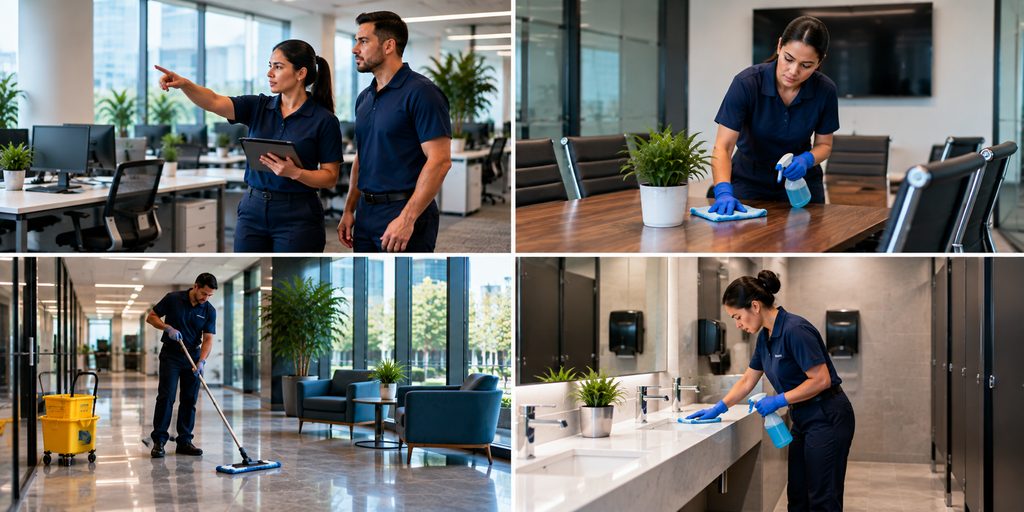
So, you have your checklist. Now what? The next step is turning those tasks into a routine that actually works for your office. Start with your space, figure out what needs attention most, and build the cleaning schedule around it.
— Start With Your Facility
First things first, take a look around your office. Which areas get the most traffic? Which ones get messy fastest? These simple things can tell you where your cleaning routine needs more attention.
- Workstations and meeting rooms
- Restrooms and break rooms
- Entrances and common areas
- Floors, carpets surfaces
— Set the Right Cleaning Frequency
Now comes the frequency. You don’t need to clean everything every day. Handle the everyday mess regularly, then give the more complex detail jobs their own time.
- Daily or nightly routine cleaning
- Weekly detail cleaning
- Monthly cleaning and floor care
— Leave Room for Facility-Specific Needs
And this is where one cleaning plan may not work for every office. A busy workplace may need more frequent cleaning than a smaller office. Your plan should match how your space is actually used.
- Office size and layout
- Employee and visitor traffic
- Operating hours
- Special areas or cleaning needs
— Need Help Turning Your Checklist Into a Cleaning Program?
That’s where a professional cleaning team can make things easier. Jani-King can build a cleaning plan around your facility, schedule, and everyday needs, with regular office cleaning plus weekly and monthly detail work.
A Better Office Cleaning Checklist Starts With the Details
Wondering if your current cleaning routine covers everything or not? It’s easy to handle the obvious jobs and miss the smaller ones that slowly add up.
Jani-King’s office cleaning checklist helps keep those details in the plan, from everyday cleaning to weekly and monthly tasks. You get a clear cleaning routine built around your office, so you don’t have to keep wondering what got missed.
Ready to get customized office cleaning a little easier? Talk to Jani-King about a cleaning plan that fits your workplace.
Also Read: commercial-cleaning-program-guide
Common Questions About Office Cleaning
1. Does my office really need cleaning every day?
If people are using the office every day, daily or nightly cleaning usually makes sense. It keeps the everyday mess from piling up.
2. What parts of an office are usually missed?
The easy-to-forget spots, mostly. Think vents, corners, areas under furniture, elevator tracks, blinds, and door frames.
3. How often should restrooms be cleaned?
For a busy office, every day is a good starting point. Restrooms get used a lot, so they can go from clean to messy pretty quickly.
4. Is an office cleaning checklist enough?
It’s a good place to start. But if you want to keep things consistent, it helps to have a proper plan for daily, weekly, and monthly cleaning.
5. Should we clean the office before or after work?
After work is often easier. The cleaning team can take care of the mess without employees working around them or customers seeing the cleaning in progress.